Commercial & Farm Solar and Battery Storage in Scotland
Quick answerCommercial solar and battery storage suits Scottish farms, estates, warehouses, hospitality venues, schools and community buildings with steady daytime electricity use. Savings depend on how much power you use in daylight, your tariff, the roof or ground space available and what you export. We arrange a no-obligation site survey and a written design.
Last updated: 30 October 2026 · Reviewed by the Scottish Energy Efficiency team
Farms, estates and businesses often use most of their electricity in daylight, which is exactly when solar panels generate. Add a battery and you can carry that cheaper power into the evening, or charge it on a low overnight rate. We arrange surveys and installations through MCS-certified partners across Scotland.
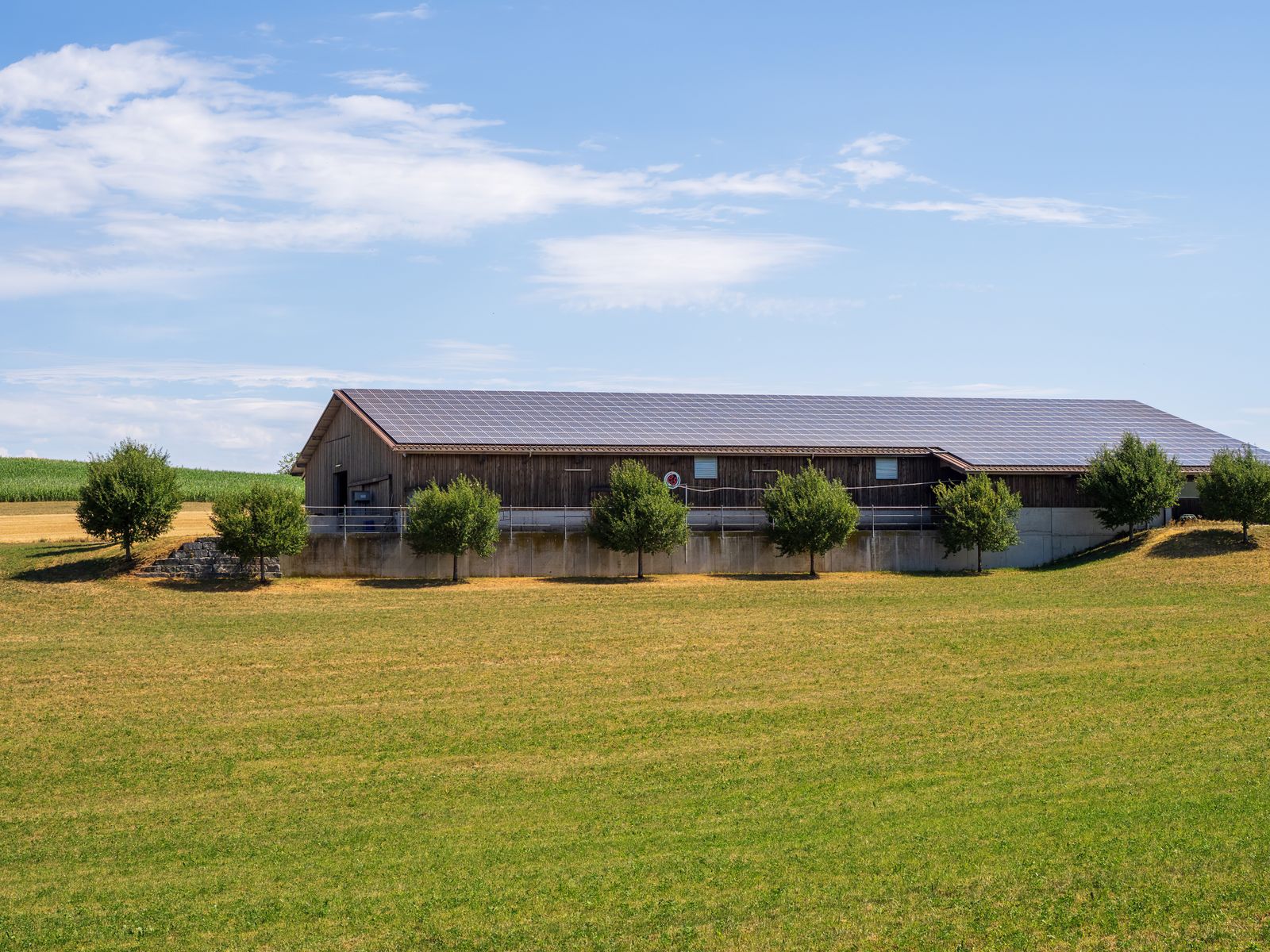
Who is commercial solar and battery storage for?
It suits any Scottish site with a meaningful daytime electricity bill and space for panels. That includes farms and rural estates, offices and small businesses, warehouses and industrial units, hotels, pubs and other hospitality venues, schools and nurseries, and community buildings such as village halls, sports clubs and churches.
- Farms and rural estates: dairy, grain drying, cold stores, workshops
- Businesses and offices with steady weekday use
- Warehouses and industrial units with large flat or pitched roofs
- Hospitality: hotels, pubs, restaurants and holiday lets
- Schools, nurseries and community buildings
What do we install for businesses and farms?
Through our MCS-certified installation partners we arrange commercial solar PV on roofs or on the ground, battery storage sized to your load, EV charging for staff, fleet and visitors, and heat pumps for larger buildings. Each system is designed around your meter data, site layout and connection to the local network.
- Commercial solar PV: roof-mounted or ground-mounted arrays
- Battery storage to use more of your own solar or shift to cheaper rates
- EV charging for fleet vehicles, staff and customers
- Heat pumps for larger buildings, farmhouses and estate properties
How do savings work for a business?
Savings come from replacing electricity you would otherwise buy. The main factors are how much you use in daylight hours, your unit rate and standing charges, how much roof or ground space you have, and how much surplus you export. We do not quote savings until we have seen your bills and surveyed the site.
- Daytime usage: the more you use while panels generate, the more you save
- Tariff: higher unit rates make each self-used kWh worth more
- Roof or ground space: sets how large the solar array can be
- Export: surplus power can earn an export payment, usually at a lower rate
- Battery: stores midday surplus or cheap overnight power for later use
How does a commercial project work?
It starts with a no-obligation site survey, where we look at your roof or land, wiring, meter data and grid connection. Next comes a written design and quote. Installation is carried out through MCS-certified partners, followed by commissioning, any network paperwork and ongoing aftercare and monitoring support.
- Site survey: roof, land, electrics, meter data and grid connection
- Design: system size, layout and a written quote
- Installation through MCS-certified partners, then commissioning
- Aftercare: monitoring, servicing and warranty support
Can a business spread the cost?
Yes. Interest-free credit up to £30,000, subject to status. Larger projects can also be paid in stages or funded in other ways, and we will talk through the options once the design is agreed. Your quote sets out the full cost before you commit, with no obligation to go ahead.
Frequently asked questions
Is solar worth it for a farm in Scotland?
Often, yes. Farms usually have large roofs or spare ground and steady daytime loads such as milking, cooling, grain drying and workshops. Scottish summers bring long daylight hours. Whether it pays for your farm depends on your usage, tariff and space, which a site survey and your bills will show clearly.
Do commercial solar panels need planning permission in Scotland?
Many roof-mounted systems on non-domestic buildings fall under permitted development, but limits apply to size, position, listed buildings and conservation areas. Ground-mounted arrays more often need planning permission. Your installation partner checks the rules for your site during design and handles any applications needed before installation starts.
Should a business add battery storage to solar?
A battery makes sense when you produce surplus solar at midday but still use power in the evening, or when you can charge cheaply overnight. Sites that use almost all their solar as it is generated may gain less. Your half-hourly meter data shows which pattern applies to your business.
Can you install EV chargers at a business or farm?
Yes. We arrange EV chargers for fleet vehicles, staff and customers through our MCS-certified installation partners. Pairing chargers with solar and a battery means vehicles can charge on your own power during the day. The survey checks your supply capacity and whether any upgrade is needed first.
How long does a commercial installation take?
Most small commercial and farm systems are installed in a few days once the design is agreed. Before that, the survey, design and any network or planning approvals usually take several weeks. Larger ground-mounted or multi-building projects take longer. Your quote sets out a realistic timeline for your site.